DAR AL-HIRAF — FURUSIYYA

The formed body

Strength, endurance, wrestling, archery, fencing — the body is not an accessory of the craft: it is an instrument of presence and discipline.

Furusiyya — the formed body

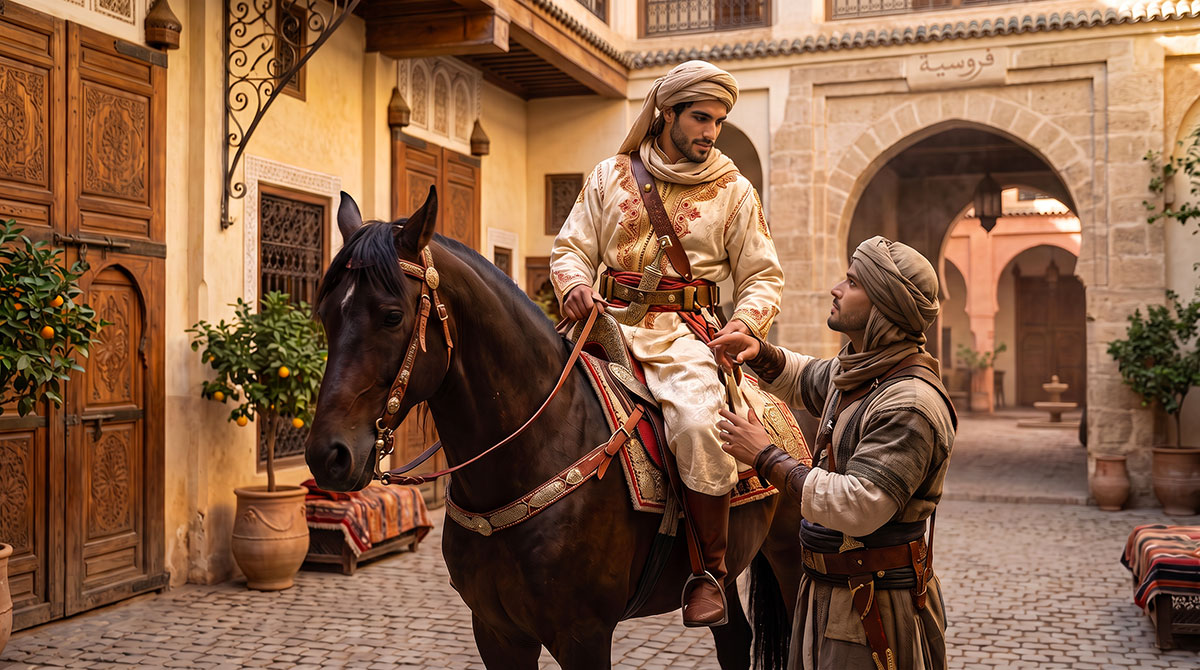
These four disciplines belong to furusiyya, the Arab-Islamic chivalric tradition that united body, bow, wrestling and sword under a single system of formation. Before specialising, the body first had to be made capable: flexibility, endurance, resistance.

Ibn al-Qayyim, in his treatise al-Furusiyya al-Muhammadiyya (الفروسية المحمدية), made of it a spiritual discipline as much as a physical one. Dar al-Hiraf follows the same order: the body is formed before it specialises.
Physical discipline

BODY

Physical discipline

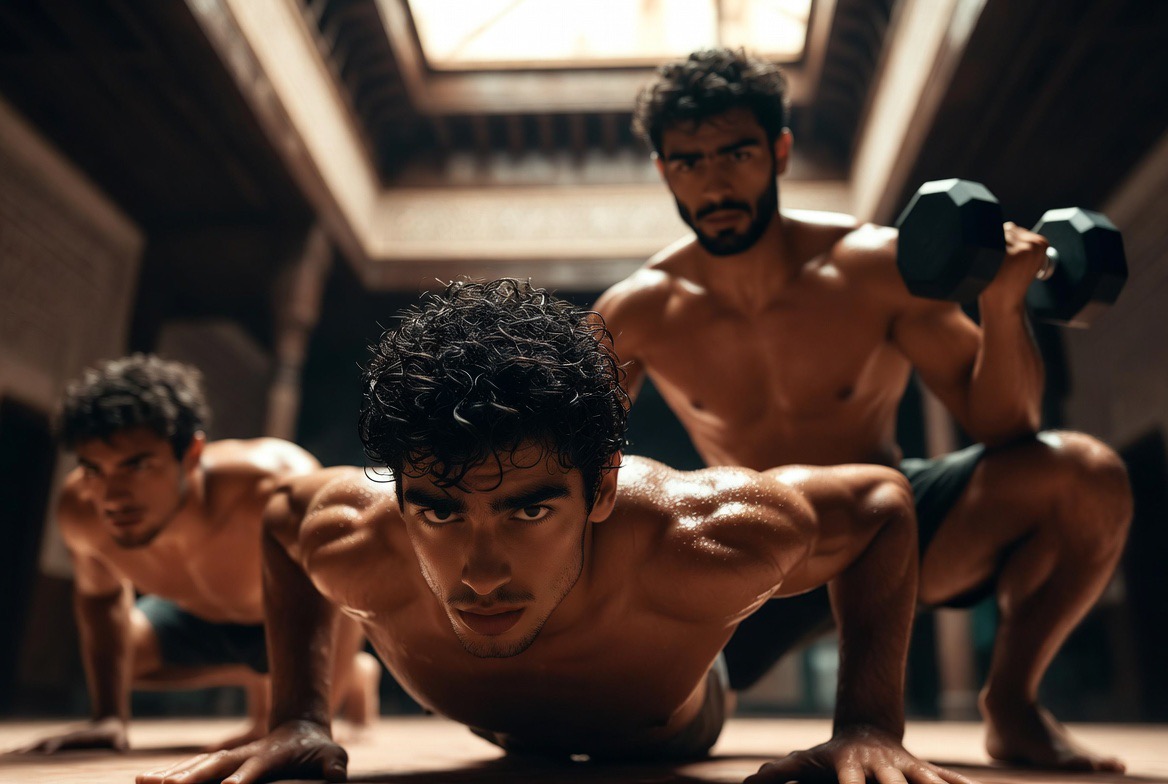
Harmonious training, controlled strength, endurance.

وَإِذا كانَتِ النُّفوسُ كِبارًا
تَعِبَتْ في مُرادِها الأَجسامُ

“When souls are great, bodies labour to the measure of their desire.” — al-Mutanabbī

The body is not trained for its own sake: it is trained because a soul that aims high needs a body capable of carrying it. Endurance prepares the young man to hold, over time, the demands of the craft, of prayer, and of the family to come.

This demand joins furusiyya, the Arab-Islamic chivalric tradition that reached its height under the Mamluks in Egypt in the 14th century. Before specialising — bow, sword, wrestling — the body first had to be made capable. Ibn al-Qayyim, in his treatise al-Furusiyya al-Muhammadiyya (الفروسية المحمدية), made of it a spiritual discipline as much as a physical one. Dar al-Hiraf follows the same order: the body is formed before it specialises.
Equitation — Furusiyya

EQUITATION

Furusiyya — the art of the horse

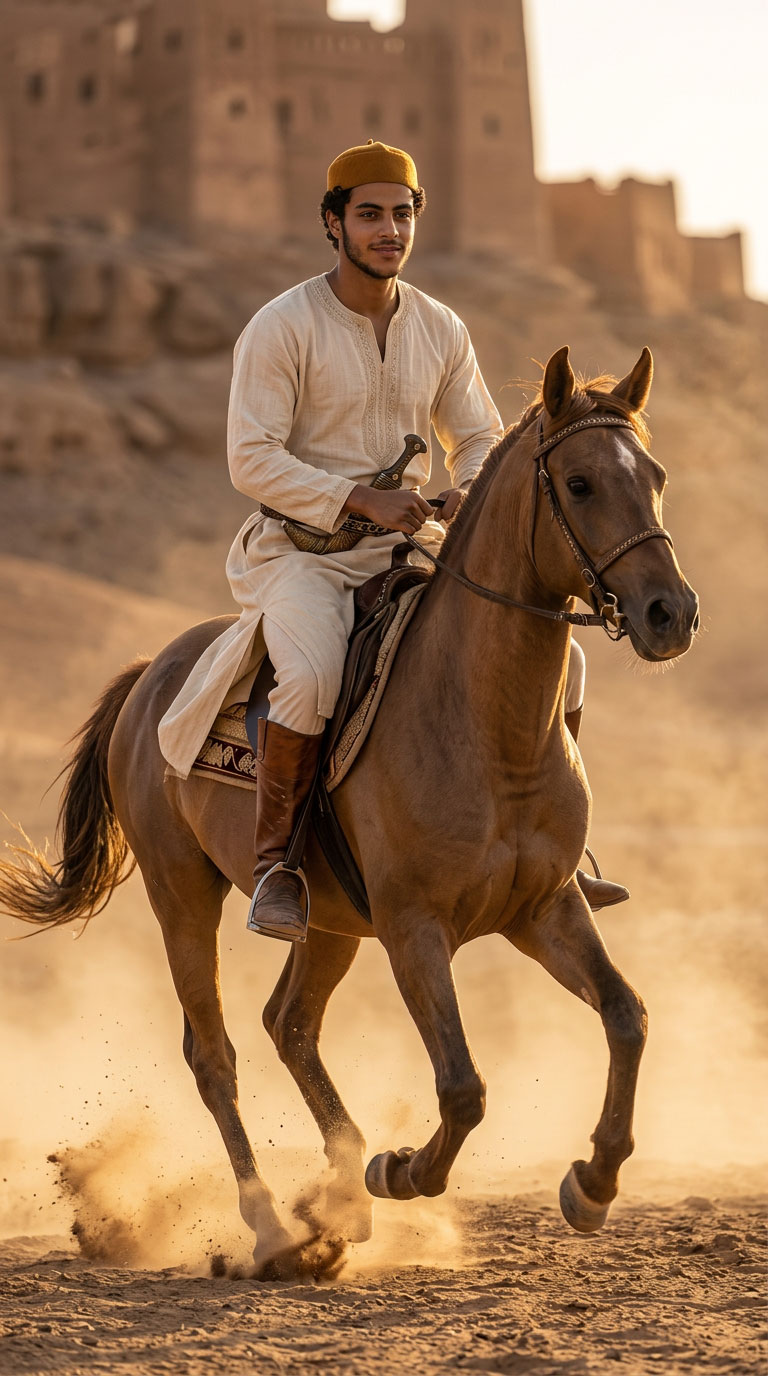
The word furusiyya (فروسية) comes from faras (فرس), the horse: in the strictest sense of the term, even before wrestling, the bow or the sword, furusiyya designates horsemanship itself. It is the first and oldest of the Arab-Islamic chivalric disciplines — the one that gives its name to all the others.

الخَيْلُ مَعْقُودٌ فِي نَوَاصِيهَا الْخَيْرُ إِلَى يَوْمِ الْقِيَامَةِ

“Good remains tied to the forelock of horses until the Day of Resurrection.” — Prophetic tradition, Ṣaḥīḥ al-Bukhārī, no. 2850

Classical treatises of furusiyya, systematised especially under the Mamluks, taught seat, handling, and care of the horse even before mounted combat — the same progression Dar al-Hiraf applies today: the body, then the horse, then the weapon.

Wrestling and strength

WRESTLING

Wrestling & strength

Body to body, respect, measure. A tradition of formative combat.

وَلَقَدْ شَفى نَفسي وَأَبرَأَ سُقمَها
قَولُ الفَوارِسِ وَيْكَ عَنتَرَ أَقدِمِ

“My soul was healed, its ailment cured, by the horsemen's cry: ‘Courage, Antar, advance!’” — ʿAntarah ibn Shaddād

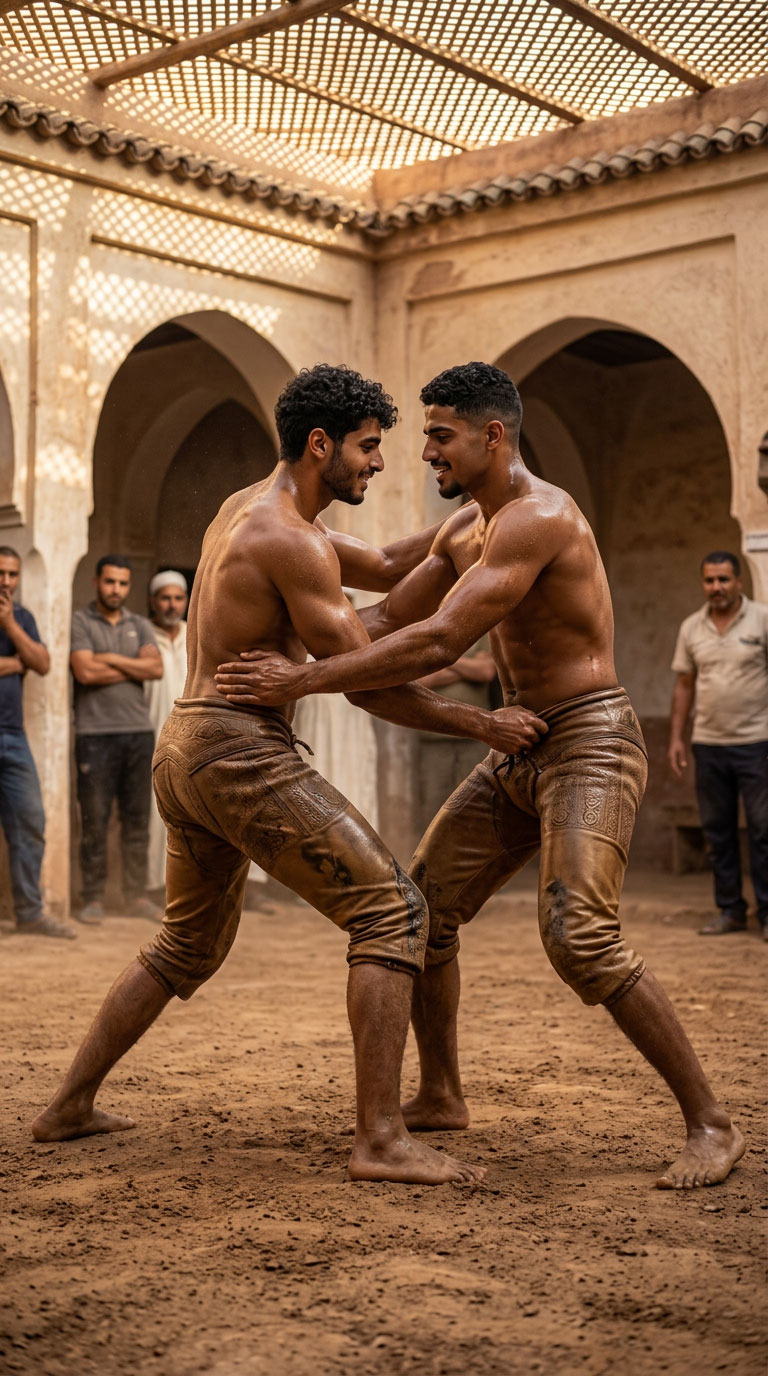
Wrestling does not teach violence, but its opposite: respect for exact measure, mastery of the gesture that could wound and does not. Body to body with a brother — a school of restraint as much as of strength.

This practice belongs to a tradition far older than the Riad: muṣāraʿat al-nūba, Nubian wrestling, practised since ancient Egypt — traces of it are already found in pharaonic tombs — and still alive today in Sudan, where it remains the second most popular sport after football. On a sand floor, without submission or ground pinning: only the controlled fall of the opponent counts.

To this standing wrestling, Dar al-Hiraf adds a second form, of a distinct lineage: ground wrestling, in worked leather trousers inspired by the kispet of Ottoman wrestling (yağlı güreş) — an agonistic tradition also documented for centuries, but foreign to the muṣāraʿat al-nūba described above. The two traditions are not confused: the first is practised standing, on sand, without ground work; the second is devoted precisely to it. Dar al-Hiraf holds them side by side rather than merging them into one — two schools, two gestures, the same demand for measure. The ground form remains reserved for the internal training context, never for public display.

Archery — Rimaya

RIMAYA

Archery

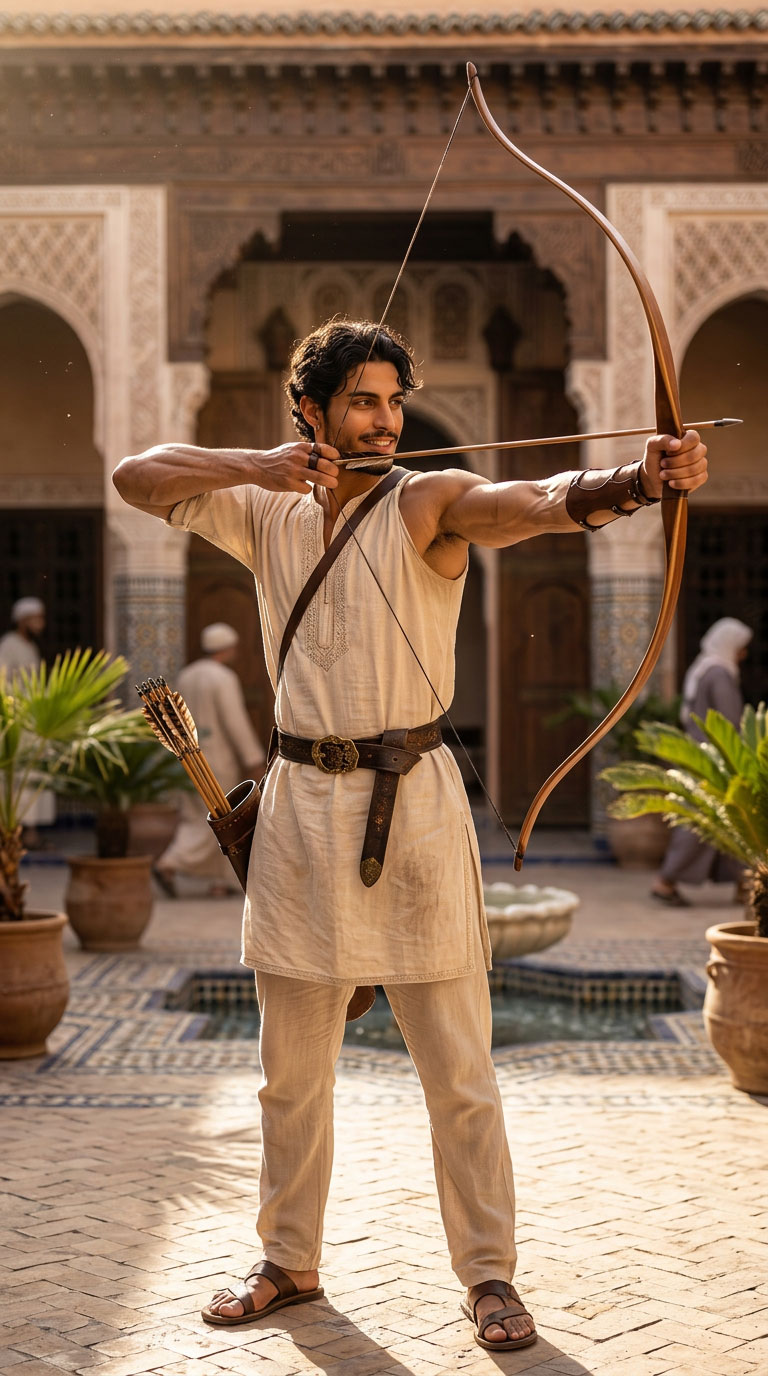
Rimaya. Breath, aim, stillness before the gesture. A discipline of measure as much as of strength.

عَلِّمُوا أَبْنَاءَكُمُ السِّبَاحَةَ وَالرَّمْيَ

“Teach your sons swimming and archery.” — Prophetic tradition (al-Bayhaqī)

وَالسَّهْمُ لَولا فِراقُ القَوسِ لَم يُصِب

“The arrow, without leaving the bow, would not reach its target.” — al-Shāfiʿī

Archery forms the mind more than the arm: inner stillness before any outer movement, total attention given to a single instant. A discipline of concentration and restraint.

Rimaya was one of the oldest arts of furusiyya, practised from the dawn of Islam and systematised by generations of masters, especially under the Mamluks. One taught less how to hit the target than how to hold body and breath in the moment before the shot: the same inner discipline Dar al-Hiraf seeks today.

Sayf wa-l-turs — sword and shield

COMBAT ARTS

Sayf wa-l-turs — sword and shield

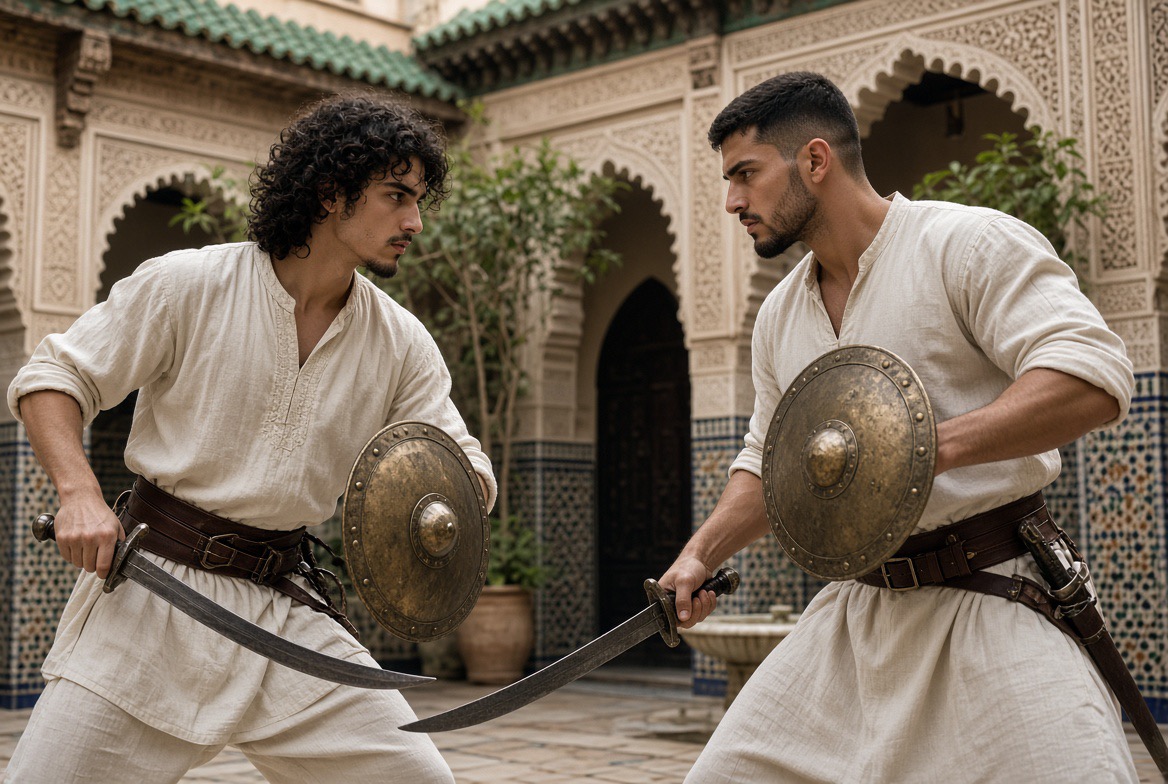
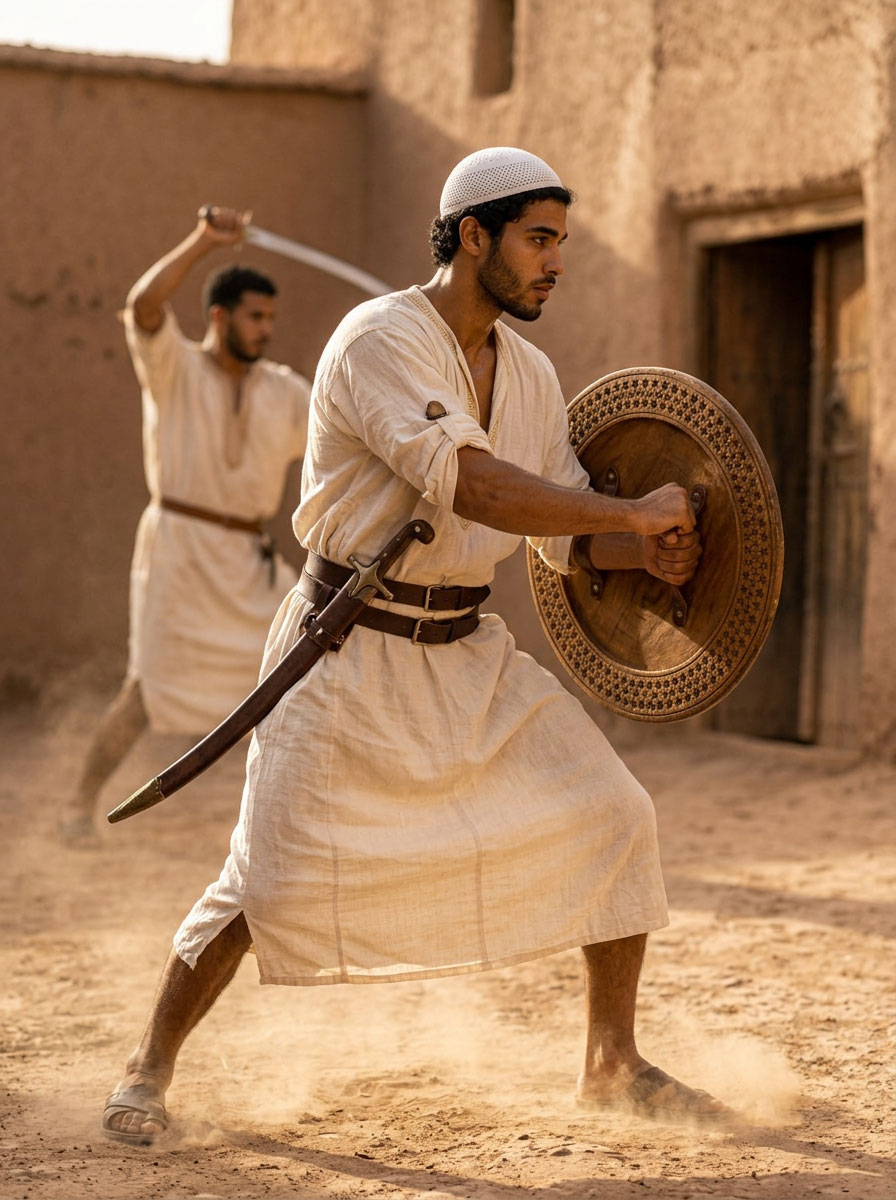
Traditional fencing with the curved sword and the small round shield, attested among medieval Arabs alongside the lance and wrestling. Two men, two blunted blades, the guard that protects as much as it threatens — the same spirit of measure as taḥṭīb, but carried by iron rather than wood. It belongs, like the bow and wrestling, to the lineage of furusiyya — formation of the body before any specialisation.

الخيلُ والليلُ والبيداءُ تعرفني
والسيفُ والرمحُ والقرطاسُ والقلمُ

“Horses, night and the desert know me — the sword, the lance, the paper and the pen.” — Abū al-Ṭayyib al-Mutanabbī, 10th century

This verse, one of the most famous in all Arabic literature, says everything: mastery of the sword is never separate from mastery of the pen. The formed body and the cultivated mind are one and the same discipline.

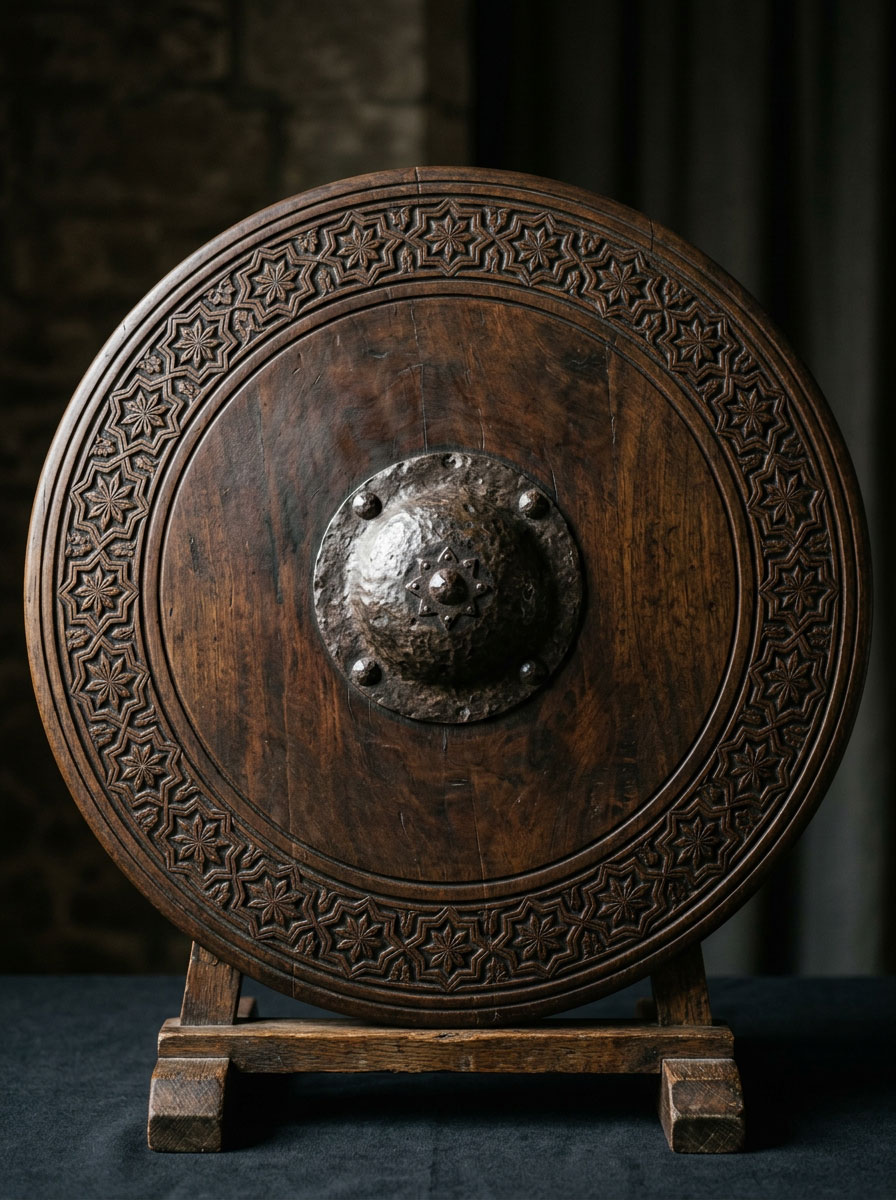
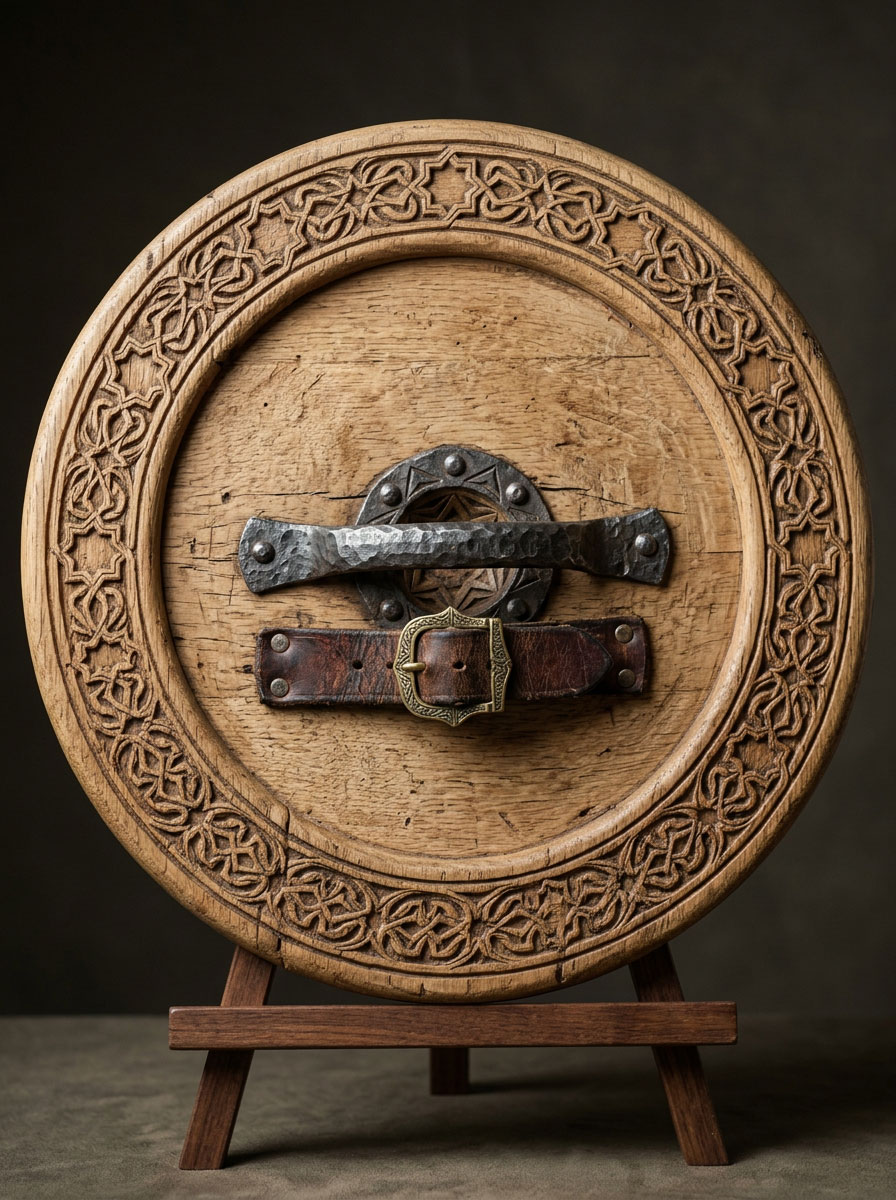
No dedicated garment is cut for this discipline: the same basic gandora suffices, sleeves rolled and fastened above the elbow to free the gesture, and a reinforced belt with a double loop to hold the scabbard. Only the turs (تُرس, the shield) has its own construction — leather stretched over a wooden core, adorned with an eight-pointed star, held by a forearm strap and a central grip.

Turs — front face

Turs — front face, eight-pointed star

Turs — back

Turs — back, grip and strap

Sayf wa-l-turs in action

Sayf wa-l-turs — training with sword and shield

The terms on this page are gathered in the glossary of the house.